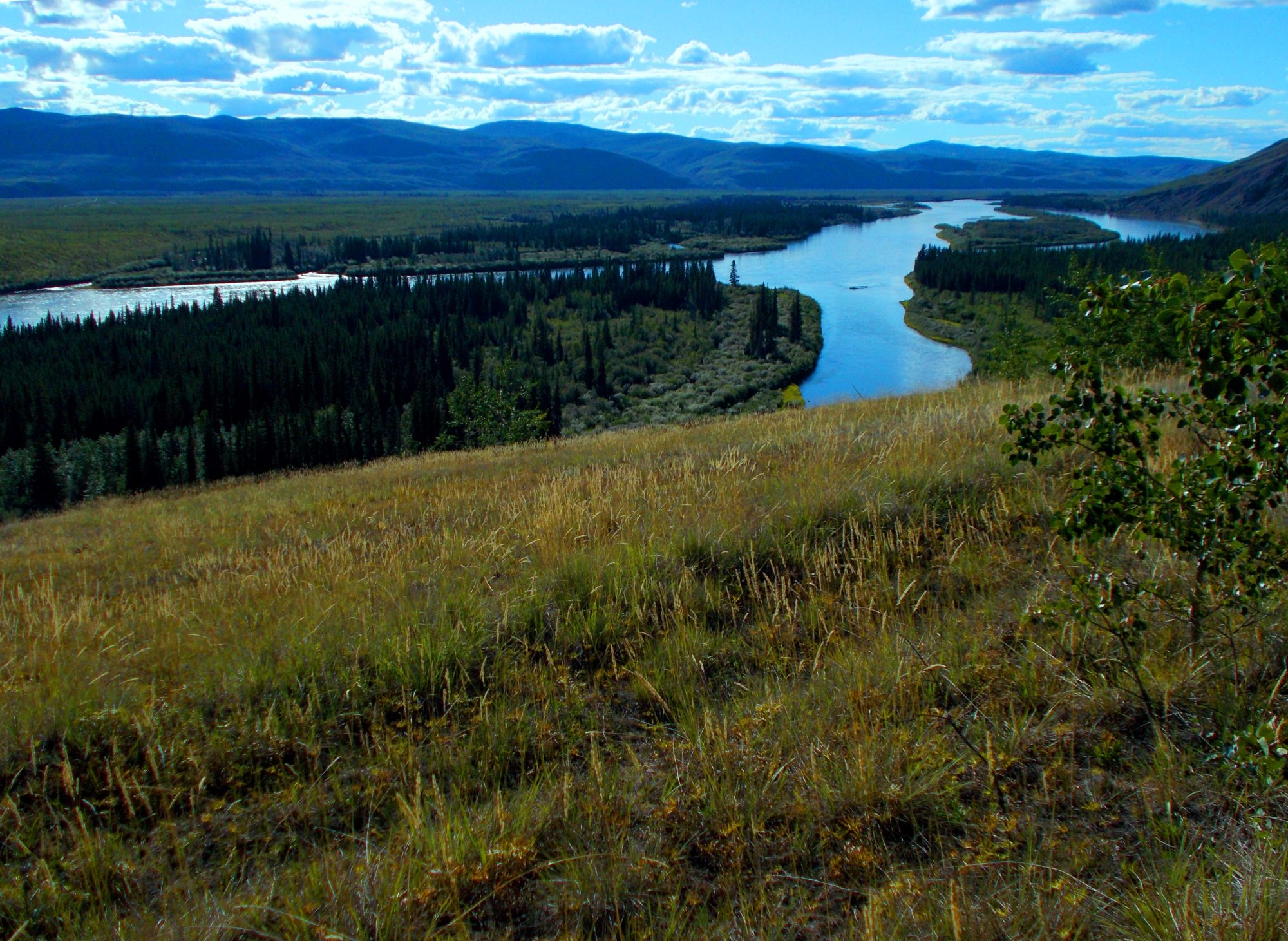
The New Racket was one of the first steamboats to operate on the Yukon River system in Alaska and the Yukon, and the first to become Yukon-based. She served traders, prospectors, and miners on northern rivers for more than a dozen years before the Yukon was put on the map by the Klondike gold rush. Her ground-breaking work is part of the undertold story of the Yukon’s early history and she could be considered an icon of this historical time period and place.
The New Racket came to life in San Francisco in 1882 and was brought to Alaska that summer by prospectors seeking gold along the Yukon River valley. She would go on to provide transportation services along the 1,775 miles of the river from its mouth in western Alaska to Fort Selkirk in the Yukon interior. She also worked on the Stewart River and appears to have gone up the Pelly River at least once, the first and only steamboat to work on these rivers before the Klondike gold rush. For much of her time of service, the New Racket was the only steamboat operating on a permanent basis in what would become the Yukon.
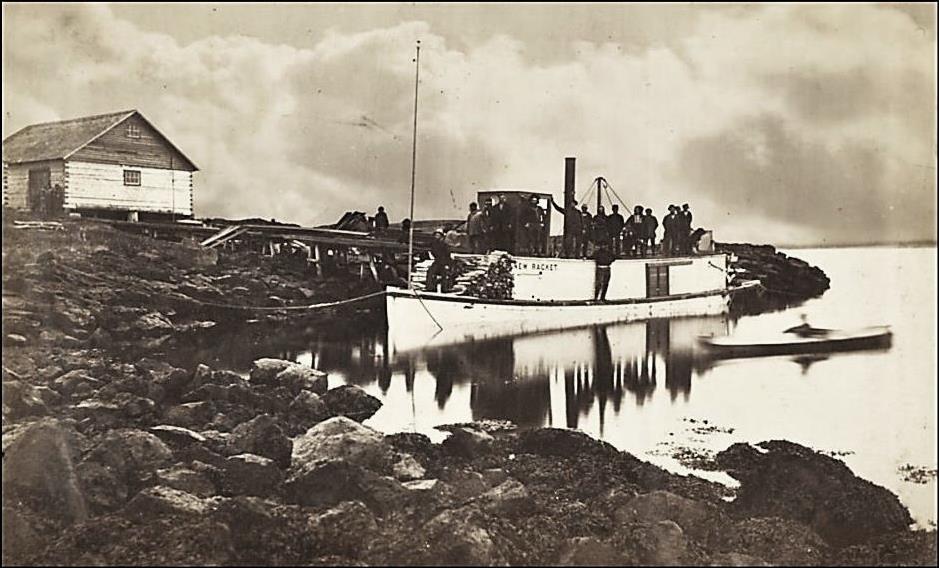
(Charles Farciot & William Everette, ‘A River’s Many Faces’, US National Park Service 2021, p. 6)
For most of her life, the New Racket was associated with the well-known fur-trading and mining service partners Jack McQuesten, Al Mayo, Arthur Harper, and later Joe Ladue. She was a small sternwheeler at 42 feet long, but described as a “powerful little steamer”, that was the transportation workhorse for these enterprises. She also played a vital role in supporting the Yukon’s emerging gold mining activity, including the first mechanized gold mining in the Territory by use of her machinery to pump water for sluicing.
In comparison to steamboats that came with the Klondike gold rush and afterwards, the New Racket was very small, but she played a large part in the historic events that preceded that era. Her story helps to tell the larger story of the Yukon’s pre-gold rush history, and while the ending of hers may never be determined, her life merits a profile in the Yukon historical record.
Origin of this New Racket Story
This article was an unintended one that arose from a previous story about Steamboat Slough near Fort Selkirk, where smaller steamboats including the New Racket were occasionally parked for the winter. Sometime after putting out that article in November 2022, I came across an old account of the New Racket being wrecked by high water in this Steamboat Slough during the break-up of the Yukon River ice in 1896. This initiated a return to the Slough to look for potential remnants or evidence of the iconic steamboat, an effort that will be talked about later.
I had been aware of the New Racket for a long time, probably in part because of her intriguing name, and finding this information about her possible demise near Fort Selkirk prompted research about her. This led to further research to gain a better understanding of the historical context that brought her to the Yukon and that she operated in. What emerged from this is that the New Racket’s working life in the Yukon before the Klondike gold rush is a reflection of the bigger picture of that early Yukon history. The research that produced this context is included in the section below for general interest.
The Yukon Historical Context Before the New Racket (1840 -1882)
The life story of the New Racket can be more fully told by setting the historical scene in the Yukon and eastern Alaska before her appearance on the Yukon River. The beginning of this goes back to 1840, when the fur-trading Hudson’s Bay Company (HBC) was starting to make inroads into what is now the Yukon from both the southeast and the northeast.
In that year Robert Campbell and his party entered the southeastern Yukon from northern British Columbia via the Liard River. His explorations from there took him over the continental divide to the Pelly River and to the eventual establishment of Fort Selkirk in 1848 near where the Pelly empties into the Yukon River. However, this occupation lasted only until 1852, when the Fort Selkirk post was destroyed by the competitive coastal Chilkat people from the Haines area of southeast Alaska, driving Campbell and his people out of the Yukon.
To the northeast of the Yukon in 1840, the HBC established Fort McPherson on the Peel River in the northwest corner of what is now the Northwest Territories, enabling the company to make incursions into the northern Yukon and on into what is now Alaska. This resulted in the building in 1846 of an outpost called Lapierre House on the Bell River in the Yukon and in 1847 a major post on the Yukon River in Alaska near the mouth of the Porcupine River that they named Fort Yukon.
The HBC operated Fort Yukon for more than 20 years until the United States purchased Alaska from Russia in 1867 and a preliminary survey indicated that the post was on American soil. The HBC was forced to vacate the site and it was taken over by the Alaska Commercial Company (ACC), an American company that had been operating a fur-trading business along the length of the Yukon River in Alaska for many years. The HBC relocated further up the Porcupine River, taking three tries to eventually establish a new post on Canadian soil near the Alaska border and calling it New Rampart House.
The summer of 1873 marks the start of a turning point in Yukon history when three men arrived at Fort Yukon from the Porcupine River. These were Leroy (“Jack”) McQuesten, Alfred Mayo, and Arthur Harper, who would become integrally involved in early developments in the Yukon by carrying out fur trading, prospecting, and mining support activities along the Yukon and Stewart Rivers for almost a quarter of a century before the Klondike gold rush. They started out working on the Alaska side of the border, but soon established a longer presence in the Yukon, and the life story of the New Racket was to become intertwined with theirs.
McQuesten, Mayo, and Harper’s northern lives got started in 1872 when they and four other men in two separate parties embarked on an extraordinary year-long journey from northern British Columbia and Alberta. The McQuesten and Mayo party was looking for fur trading opportunities, while Harper and his party had ambitions of prospecting for gold. The two groups met on the Liard River in northeastern British Columbia where they spent the winter of 1872-73 together.
In the spring of 1873 the parties continued their travels separately, but along the same route down the Mackenzie River and then up the Peel River to Fort McPherson, NWT. From this post they travelled west following the HBC’s overland supply route over the continental divide into the northern Yukon. They resumed water travel on the Bell River, passing by Lapierre House, then along the Porcupine River into Alaska. The two parties’ long trips ended in July when they arrived at the Alaska Commercial Company’s (ACC) Fort Yukon post on the Yukon River.
At Fort Yukon, McQuesten, Mayo, and Harper were near the eastern end of the ACC’s fur trade along more than 1,200 miles of the Yukon River in Alaska, a long-distance trading enterprise like that of the HBC along the Mackenzie River system. In between these two fur-trading networks was the area that is now the Yukon, and in 1873 it was virtually devoid of outsider activity other than HBC and occasional missionary travel through the northern Yukon between Fort McPherson and the Porcupine River in the Yukon/Alaska border area.
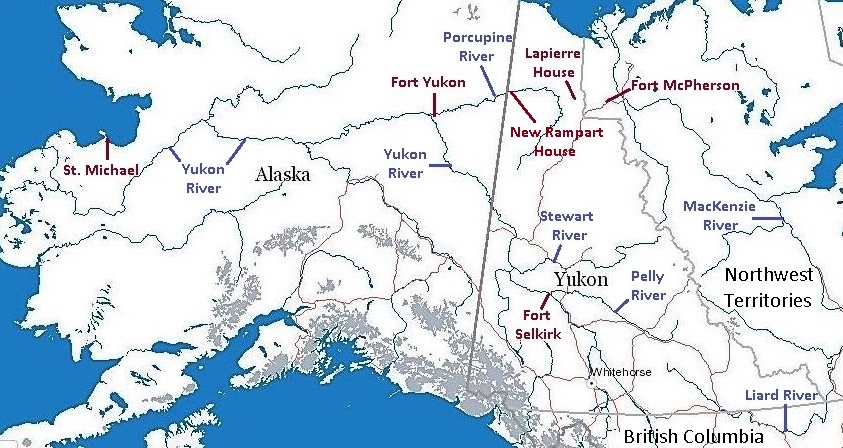
(GeoYukon)
The Chilkat people had continued their trade between the southeast Alaska coast and the Fort Selkirk area, but for much of the Yukon interior the departure of Robert Campbell and the HBC from Fort Selkirk in 1852 had created a fur-trading vacuum. This would begin to change 22 years later, when McQuesten, Mayo, and Harper set out to make the Yukon their working ground for fur trading and prospecting.
In the summer of 1874, the three men went down the Yukon River on an ACC boat to St. Michael on the west coast of Alaska near the mouth of the Yukon River. There they began an association with the ACC, having a relatively loose relationship with the company over the next couple of decades, beginning as employees who were free to prospect and later as ‘free traders’ who made their own business decisions. They also became familiar with operating the ACC’s steamboats on the Yukon River, using the Youkon, its successor the Yukon, and the St. Michael to support their operations.
McQuesten, Mayo, and Harper were determined to stay in the north and all three men soon married First Nations women who would become integral to their enterprises. They raised large families, and while Arthur Harper and his wife Jennie eventually separated, Jack McQuesten and Al Mayo remained with their wives, Katherine and Margaret respectively, for the rest of their lives.
In August of 1874 McQuesten and a Frank Barnfield travelled upriver from Alaska on the ACC steamboat Yukon, the first to come into what is now the Yukon. At a location six miles downriver from the future site of Dawson City, they established a post with the help of local First Nation people and called it Fort Reliance. It was the first new outsider development in the Yukon since Robert Campbell had abandoned Fort Selkirk in 1852. McQuesten would spend much of his time over the next 12 years working from Fort Reliance, often alone but with Hän First Nation neighbours across the river at a site called Jutl’à’ K’ät or Nuklako.
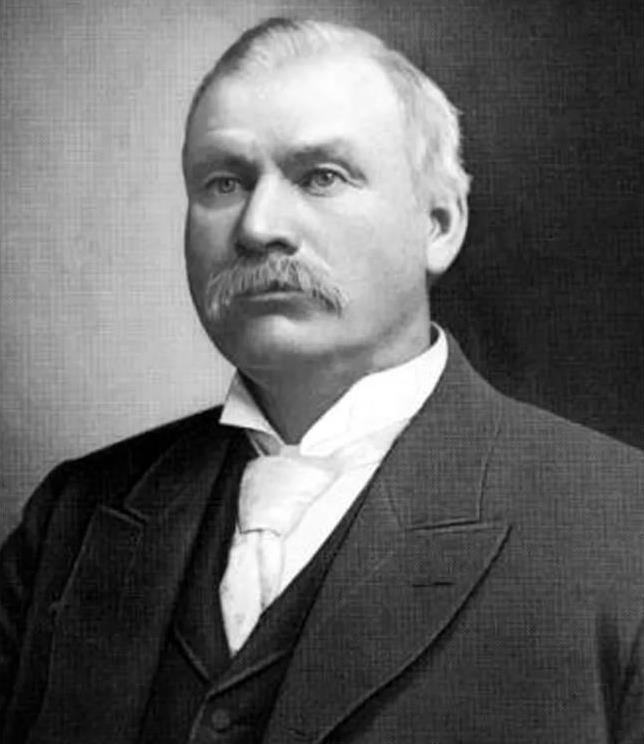
(Alaska’s Digital Archives, ASL-P01-1963)
Fort Reliance became ‘Mile 0’ for the upper Yukon River, with other points along the river measured from it and some named by it, such as the Fortymile and Sixtymile Rivers. The historic importance of Fort Reliance is that while it facilitated fur trading with First Nation people in the Yukon, it also supported eventual prospecting that would directly influence the discovery of gold in the Klondike more than 20 years later.
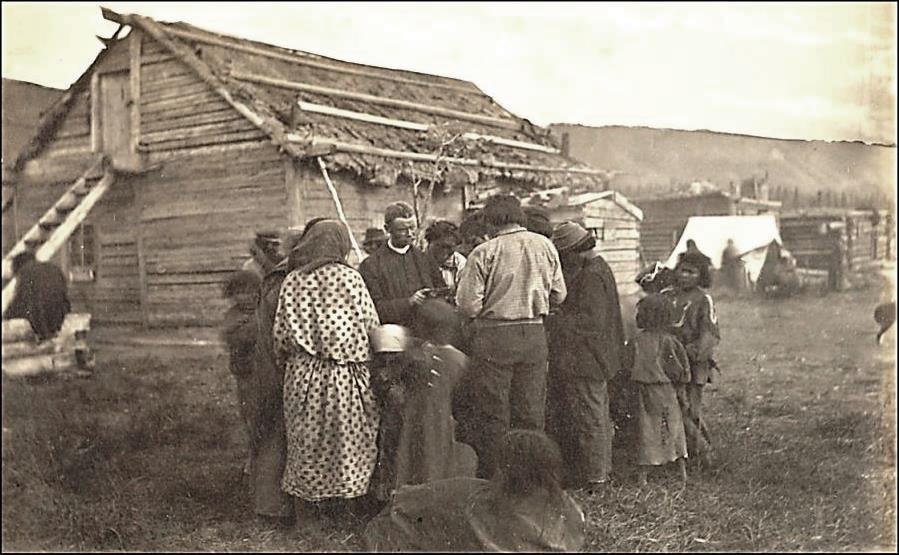
(Charles Farciot & William Everette, ‘A River’s Many Faces’, US National Park Service, 2021, p. 15)
After establishing their foothold in the Yukon at Fort Reliance in 1874, the comings and goings of McQuesten, Mayo, and Harper during the years following are difficult to trace, and there are discrepancies in some of the information. In 1875, with no formal agreement, they formed a partnership that lasted for 14 years. Each year for most of their first decade at Fort Reliance, one or more of them would travel down the Yukon River in large First Nation canoes with ten paddlers and deposit their furs at one of the ACC stations.
By the time of the 1880 United States census, there were a reported 3,263 ‘natives’ living along the Yukon River, about 10% of Alaska’s native population, along with 11 ‘whites’, and 12 ‘creoles’ (mixed race). Two of the ‘whites’ were at Fort Yukon and would have been ACC traders, perhaps Arthur Harper and Al Mayo, and interestingly another ‘white’ was shown to be at Fort Reliance in what would be the Yukon after the boundary was determined. This was undoubtedly Jack McQuesten, who may have been the only non-First Nation person in the whole Yukon at the census time, and he was accompanied by 82 ‘natives’ there and at the village across the river.
While McQuesten, Harper, and Mayo grew their fur trading business on the Yukon River of eastern Alaska and western Yukon during the 1870s and into the 1880s, they also found time to do some occasional prospecting. This was particularly the case for Arthur Harper, who had ventured to the north primarily for that reason, and he found good gold showings on the Fortymile and Sixtymile Rivers. Both he and Jack McQuesten wrote many letters to friends in the mining community in British Columbia and southeast Alaska describing the promising mining potential of the Yukon. They are credited with sparking the interest in mining opportunities in the Yukon and the eventual opening of the Chilkoot Pass in 1880 for access to the Yukon interior from the southeast Alaska coast.
Near the end of the three traders’ first decade in Alaska and the Yukon, changes were on the horizon with gradually increasing numbers of gold seekers coming into the country, most from the south over the Chilkoot Pass and some from the west up the Yukon River. In the fall of 1880, the first year that the Pass was opened to outsiders, McQuesten heard about miners’ activities further up the Yukon River, and two years later the first miners ever to overwinter in the Yukon did so with him at Fort Reliance. The following summer of 1883 brought a new development that would support the traders’ activities and enable them to expand their endeavors on the Yukon side of the border: their acquisition of the New Racket.
The New Racket’s First Year (1882-83)
The New Racket was built because of a vision of Alaska riches by Edward Schieffelin, who had become wealthy silver mining in Arizona and was known as the founder of the town of Tombstone. He believed there to be a mineral belt extending into Alaska and had received news from miners who had gone into what is now the Yukon by the Chilkoot Pass in 1881 and found gold on the Stewart River.
In 1882 in San Francisco, Schieffelin commissioned the construction of a small steam-powered sternwheeler to take him and a small party of men on a three-year search for minerals in Alaska. Since it was a new type of venture (or ‘racket’) for them because “it replaced their customary mules for packing purposes”, they named their boat the New Racket.
Schieffelin’s new Yukon River exploration boat was 42 feet in length (she is sometimes cited as 53 feet, which may be inclusion of the paddlewheel), and had an 11 foot beam (width). She was described as a “trim and efficient vessel”, and “wasn’t big but she was adaptable”. She burned two-foot lengths of wood that were piled on the bow and was said to be “wholly taken up by engine and boiler”, so that her loads, including passengers, had to be mostly hauled on barges and smaller boats that she towed behind her.
In mid-July 1882, after a trial run in the San Francisco harbor, the New Racket was disassembled and loaded onto the deck of the schooner H.L. Tiernan for transport to Alaska. A month later she was off-loaded at St. Michael and prepped for a long voyage up the Yukon River that began in early August. The Schieffelin party prospected along the way, going about 900 miles up the river into central Alaska until the river began freezing up. They overwintered near the mouth of the Tanana River at the ACC’s Nuklukahyet trading station, where Arthur Harper and Al Mayo were also spending the winter.
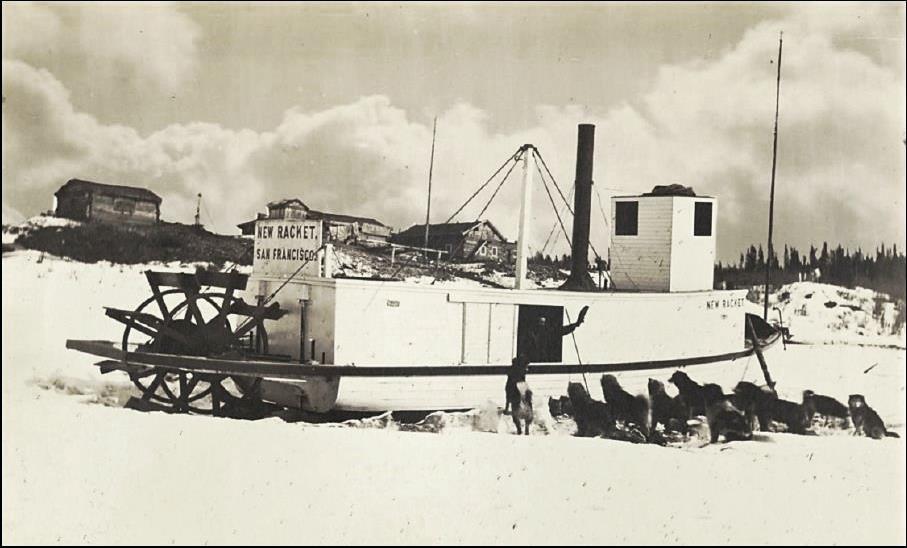
(Alaska State Library, Charles Farciot Album, #227-017-024)
The following season of 1883 the Schieffelin party prospected further up the Yukon River, but despite finding some gold in paying quantities, they became disillusioned with their chances of making a big gold discovery. Their planned three-year voyage of discovery turned into a one-year jaunt, with Schieffelin stating that Alaska would never become a great mining country. He blamed his failure on the climate, poor timber, and inaccessibility, and said that if he is going to look for gold, he might as well do it where it’s warm.
Schieffelin’s decision to abandon his Alaska venture came at an opportune time for Jack McQuesten, Arthur Harper, and Al Mayo, who had decided to end their employ with the Alaska Commercial Company (ACC) and work as independents. Having by then been in the country for a decade and using ACC steamboats in their work, the trading trio would have recognized the value the New Racket could bring to their enterprises. The ACC in turn saw the value of working with these experienced traders who now had their own steamboat and gave them better terms that provided greater freedom. The trio purchased the New Racket in August 1883, and her destiny as a workhorse on rivers of the Yukon was about to begin.
The New Racket’s Working Life, part 1 (1883-1887)
The exploits and activities of McQuesten, Mayo, and Harper in the Yukon and Alaska are somewhat well recorded, but details about their use of the New Racket are not always stated. The partners’ undertakings included development of trading posts and hauling supplies to them, taking their furs downriver to sell, and transporting passengers and their belongings, all of which the New Racket would have played an important if untold role.
At this time she was the third steamboat working on the Yukon River, and while the other two, the ACC’s Yukon and St. Michael, provided occasional services into the Yukon, the New Racket became primarily based in the Yukon. A sketch of her work life in the Yukon can be garnered from recorded activities that show her value in supporting McQuesten, Harper, and Mayo’s fur trade business and facilitating the new developments in gold prospecting and mining.
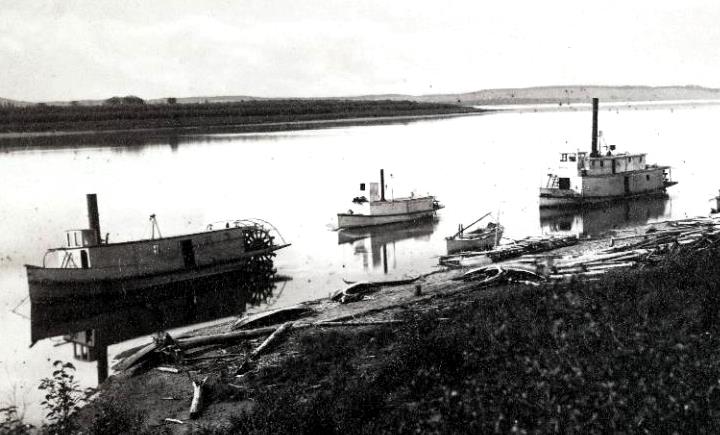
(Charles Farciot & William Everette, ‘A River’s Many Faces’, US National Park Service, 2021, p.4)
For most of the New Racket’s work she was piloted by Al Mayo, leading him to be known as Captain Mayo, and occasionally by Jack McQuesten, who professed to know nothing about operating steamboats. Every year the boat went downriver at least once to St. Michael, Alaska, to deliver the partners’ furs and to bring supplies and provisions back up, a trip from Fort Reliance of about 1,600 miles each way that took the better part of two months. In this early period of Yukon River steamboating, there were no wood camps established along the river, so ‘wooding up’ required everybody on board the boat to disembark and help in cutting and loading fuelwood .
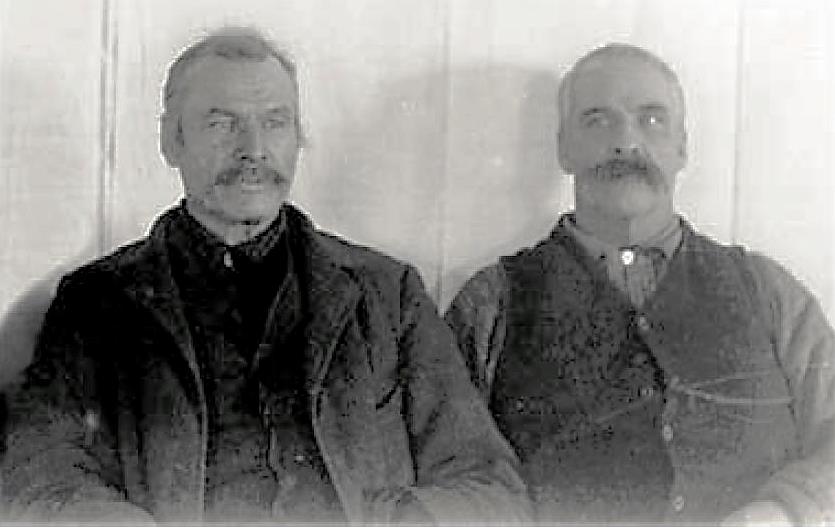
(Bancroft Library, Davidson Collection., #1946.6.26)
In the winter of 1882-83, while Ed Schieffelin and his party with the New Racket were lodged in central Alaska, 12 miners who had come from the south over the Chilkoot Pass were spending their winter at Fort Reliance. They built cabins there and gave McQuesten some company that he had lacked for the previous winters. This was an historic event because they were the first miners to venture that far down the Yukon River and remain in the Yukon for the winter. One of these men was Joe Ladue, who would later have business relationships with McQuesten, Mayo, and Harper, particularly the latter.
During this winter at Fort Reliance the group implemented a ‘miners’ committee’ known from other gold-mining areas as an informal way of keeping order and resolving conflicts until government law and order came into the country. They all had an enjoyable winter at Fort Reliance and it was the beginning of a fraternity that was to become known as the Yukon Order of Pioneers.
The following summer of 1883, when McQuesten and his partners purchased the New Racket, 50 miners again came in over the Chilkoot Pass and made the first significant discoveries of gold on the gravel bars of the Stewart River. Some of the miners had planned to spend the winter at Fort Reliance, but the steamboat Yukon broke down coming up the river with supplies, prompting McQuesten and the miners to go downriver on the New Racket and join Harper and Mayo at the ACC’s Nuklukayet post in central Alaska for the winter. This was the first winter that Fort Reliance was unoccupied since its establishment nine years previously.
In the spring of 1884, McQuesten and the New Racket brought the miners who had wintered in Alaska back up the Yukon River to their gold diggings on the Stewart and Sixtymile Rivers. Another 75 or so miners travelled in from the coast for the mining season, packing everything they needed on their backs over the Chilkoot Pass. On arriving at their destinations in the Yukon, these miners had to sacrifice mining time to hunt and fish to sustain themselves, and those who returned to the coast had to leave early enough to travel up the river and over the pass before the winter freeze-up started.
McQuesten observed all of this and could see that the Yukon’s mining activity would be greatly enhanced by the miners staying the winter in the Yukon and having access to provisions, clothing, and mining tools that could be brought in by steamboat. The traders’ timely purchase of the New Racket would support this new economy, with the little steamboat being described as “represent[ing] the first significant capital invested in Yukon mining”.
McQuesten knew that more and more miners would be coming into the region and so he made a trip ‘outside’ in the fall of 1884 to get miners’ supplies in addition to his normal fur trade goods. He went down the Yukon River on an ACC steamboat to St. Michael and then on a steamship to San Francisco, where he was occupied for many months. While the fur trade was still the bulk of their business, McQuesten’s buying trip to the south marked a transition of their focus to also supplying and transporting miners.
Harper and Mayo had spent their winter at Fort Reliance, with the New Racket presumably parked in a nearby slough or pulled well up onto the riverbank. In late May 1885 they took her downriver into Alaska to do some fur trading, then carried on down to St. Michael in early August to turn the furs over to the ACC for shipment south. There they met McQuesten with the fur trading goods and the food, clothing, and miners’ equipment and tools he had brought back from San Francisco.
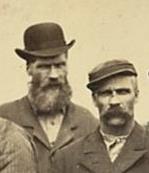
(Charles Farciot & William Everette’s ‘A River’s Many Faces’, US National Park Service 2021, p. 2)
The cargo was loaded onto the New Racket and her barges and the little steamboat chugged this load up the 1,592 miles of Yukon River across the breadth of Alaska and into the Yukon to Fort Reliance. This was the first time supplies for miners were brought up the river into the Yukon and it made news on the ‘outside’, with the Victoria Daily Times reporting in November 1885 that “… the steamer New Racket delivered last fall a quantity of provisions at the mines, at a moderate charge”.
After unloading the miners’ supplies at Fort Reliance, McQuesten took the New Racket up the Yukon River to the abandoned Hudson’s Bay Company site at Fort Selkirk to trade for furs with the First Nation people there. This was the first known trip that far up the river by a steamboat, one that may have been done annually. On the return back down the Yukon River he took prospectors and their provisions up the Stewart River, making the New Racket the first steamboat to operate on that river.
About 75 miners came into the Yukon in 1885, more than half of them working on the bars of the Stewart River. Increased yields of gold from there were to make 1885 a pivotal year in early Yukon mining, and it would also affect the plans and activities of McQuesten, Harper, and Mayo for the following year.
In 1886 100 to 200 miners came over the Chilkoot Pass and spread out onto various rivers and creeks of the west-central Yukon. Increased focus of mining activity on the Stewart River prompted McQuesten, Harper, and Mayo to abandon Fort Reliance, their original stronghold in the Yukon built 12 years previously. This small post along with the services of the New Racket had provided the first means for miners to extend their seasons and activities by staying the winter in the Yukon rather than travelling back out.
The mining activity on the Stewart River prompted the traders to establish a new supply post on the Yukon River near the mouth of the Stewart, calling it Fort Nelson, a name now little known in Yukon history. At the time it was more commonly called both ‘Mayo’s post’ and ‘Harper’s place’, and although it did not last long, the location would later be reoccupied and known as Stewart City or the Stewart River settlement. It was also at this time that Joe Ladue, the future “founder of Dawson City”, began working with McQuesten, Mayo, and Harper in the trading business.
Another development in the summer of 1886 saw the New Racket provide mechanical assistance to the miners on a Stewart River bar about 85 miles up from the mouth, in the vicinity of the present McQuesten airstrip. The boat was hauled up onto the bar, where the engine was disconnected from the paddlewheel and rigged to drive a set of pumps manufactured on site to provide water to sluice boxes. In less than a month, this innovation to harness power from the New Racket made her owners and the miners $1,000 each.
This harnessing of the New Racket’s power to pump water for sluicing was the first use of machinery in Yukon mining. The river bar, given the appropriate name of Steamboat Bar, ended up being the richest ever found on the Stewart River. The use of the New Racket to assist in mining was noted as being done on the Stewart River again in 1889 and 1893, and perhaps other unrecorded times as well.
That same summer of 1886, Al Mayo and the New Racket transported miners further up the Stewart River to a site that became known as Mayo Landing, now the location of the community of Mayo. That site along with Mayo Lake and Mayo River were named the following year for him, the regular captain of the boat.
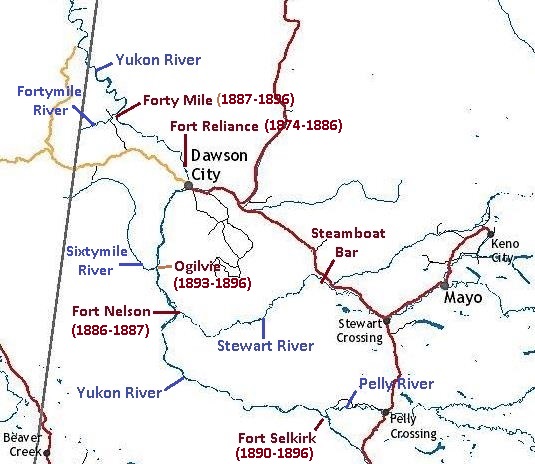
(GeoYukon)
In early September 1886 Jack McQuesten headed off on another trip to San Francisco to purchase supplies for the miners. Al Mayo remained in the Stewart River area with the New Racket, and when the ice started running in the rivers that fall, he put her up for the winter near Fort Nelson, in a slough at the mouth of the Stewart River. Mayo settled in at Fort Nelson for the winter along with nearly 75 miners and all would soon learn that developments 120 miles down the Yukon River in the Fortymile River area would bring changes in their activities the next mining season.
The few miners prospecting the Fortymile in 1886 had been preparing to wrap up their work for the winter when discoveries of coarse gold were made by two men who had gone there on advice from Arthur Harper. Harper had found good prospects at the mouth of the Fortymile River in his first year in the country and knowing the discovery could be a valuable one, sent word out via the Chilkoot Pass to McQuesten in San Francisco to increase the amount of supplies to bring back.
In the spring of 1887 the miners who had wintered on the Stewart River and farther up the Yukon River travelled on the ice to the Fortymile area to get in early on the new action there. That winter of 1886-87 had been the coldest one so far recorded and those who had wintered at Fortymile along with the newer arrivals became short of provisions. Upriver at the Fort Nelson post, Al Mayo launched the New Racket as soon as the ice went out and prepared to take all the provisions he had and the few remaining Stewart River miners down the Yukon River to the Fortymile.
On May 28 while Mayo was doing this, along came a hand-made boat with the brothers Bernard (“Ben”) and William Moore, who had come from Dyea via the Chilkoot Pass, the southern lakes, and the Yukon River to deliver Canadian mail to the newly-developing townsite of Forty Mile. They were sons of the well-known Captain William Moore (“the founder of Skagway”), who had come into the Yukon River valley in 1882 with Joe Ladue and others. The son Ben later authored the book Skagway in Days Primeval (1968), based on his journals which recorded many details of 1887 Yukon history, including a unique first-hand account of a 3,300-mile voyage aboard the New Racket.
Ben Moore’s 1887 Trip on the New Racket
Ben and William Moore had begun their trip from Dyea on March 23, 1887 carrying packs and pulling sleighs up the Dyea River and then the Chilkoot Pass, arriving at the summit on April 5. They reached Lake Bennett on April 10 and pulled their sleighs north along the lakes (Bennett, Tagish, Marsh, Laberge, and the sections of river between them), sometimes assisted by attached sails. At the outlet (north end) of Lake Laberge they parked the sleighs, built a raft, and left there on May 3, following the ice as the Yukon River broke up. They were soon stopped by an ice jam near Hootalinqua and spent more than a week whipsawing lumber and building a boat on what appears to now be known as Shipyard Island. On May 14 they headed down the Yukon River in their boat, still encountering occasional ice jams as they went.
On May 28 the Moore brothers arrived at the Fort Nelson post of McQuesten, Mayo, and Harper at the mouth of the Stewart River. There they saw the New Racket tied up to the shore with smoke coming from her smokestack and preparations being made to go downriver. The Moores went on ahead, passing by the now-abandoned Fort Reliance and arriving at Forty Mile the next day after 67 days of travelling the more than 620 miles from Dyea.
Three days later, Arthur Harper and Al Mayo arrived on the New Racket and sold the remaining goods they had brought from Fort Nelson. They then got the steamboat ready for their annual fur delivery trip down the Yukon River to St. Michael, Alaska, and took on Ben Moore to be the New Racket’s steersman/co-pilot. An additional purpose of the trip was to meet Jack McQuesten on his return from his San Francisco buying trip and bring the cargo back up the river to Forty Mile.
On June 2 Mayo, Harper, and Moore and a few passenger miners left Forty Mile, with the New Racket towing an empty barge to collect furs taken in at posts along the river and deliver them to St. Michael. At Fort Yukon, they found the old HBC and ACC fur-trading post deserted, the large buildings still there but the stockade having been cut down for steamboat fuelwood. The next day they did some trading at what Moore termed an “Indian ranch”, and later at Nuklukayet, a village about halfway across Alaska, they traded with an estimated 60 First Nation people in canoes.
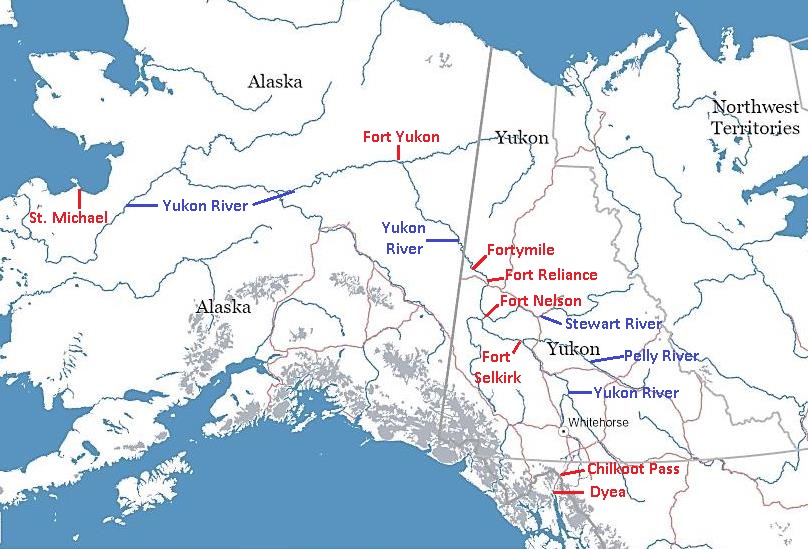
(GeoYukon)
Moore recorded that the New Racket would do about nine miles per hour in still water and ran day and night on this trip except for time taken to cut and load fuelwood onto the boat. They had First Nation deckhands and frequently gave rides to people they encountered, usually miners. “Wooding up” with fuelwood was required once and sometimes twice each day, and every person on board was expected to help with this part of the daily work routine. Moore also recorded interesting details, such as observing “Indian dogs” diving into the river to catch salmon.
The trip down the river was relatively uneventful, other than running aground several times and the barge becoming sheathed in ice in a cold and windy western Alaska on June 14, the day before they reached St. Michael. The westward 1,750-mile trip of the New Racket from Forty Mile to St. Michael had taken 14 days, an average of 125 miles per day travelling with the current. Jack McQuesten and the supplies he had purchased in the south arrived by ocean steamship a few days later and were loaded, three tons on the New Racket and nine tons on the barge.
They departed St. Michael on June 22 and the trip up the Yukon River, loaded and against the current, was not so uneventful as the downriver trip. There were mechanical problems along the way, such as “broke a screw in the donkey pump” and “lost the oil cup of the crankpin overboard”. A few days later they had to lay up for the night to “wash out the boiler” and shortly after that to “splice the wheel ropes” and “unship the rudders”. The day after that the barge ran aground and had to be given a strong jerk by the New Racket, throwing Arthur Harper into the water.
About a week later both the steamboat and the barge ran aground, and while the boat was able to be pried off with long levers, the barge was a heavy drag and had to have three and half tons of its cargo removed so that it could be pulled off the bar. There were more such mechanical and navigation issues, but the New Racket eventually succeeded in delivering her load to Forty Mile on July 27. It had taken 36 days, an average of 48.5 miles per day against the current to get there, two and a half times as long as the downriver trip.
At Forty Mile, Arthur Harper set up a large packing case for a counter on the deck of the barge in front of the townsite and sold all their provisions, goods, and tools over two days, mostly paid for with gold dust. As soon as that was accomplished, Harper and Mayo started again for another trip to St. Michael with the New Racket. They asked Moore to stay on and work for them, but he declined the offer.
Ben Moore described the 3,300-mile round trip on the New Racket from Forty Mile to St. Michael and back as long, hard, and tedious, and always fighting mosquitoes. On July 30 he and three other men began pulling and poling their small boat back up the Yukon River, another long, hard, and tedious trip, and always fighting mosquitoes. Six weeks later on September 6, Ben Moore stood on the summit of Chilkoot Pass on his 22nd birthday, and two days later arrived at Dyea after a trip of 4,500+ miles over the previous six months. Nine years later, he would see the New Racket again one more time.
The New Racket’s Working Life, part 2 (1887- ca. 1896)
McQuesten, Mayo, and Harper’s new focus on the Fortymile area for mining meant they had to abandon their Fort Nelson post at the mouth of the Stewart River the year after it was built. Their first substantial building at Forty Mile was a new trading post, with Harper in charge of it. There ended up to be around 300 miners in the Fortymile area in 1887, and all or most had now become dependent on the three traders and the New Racket for their needs.
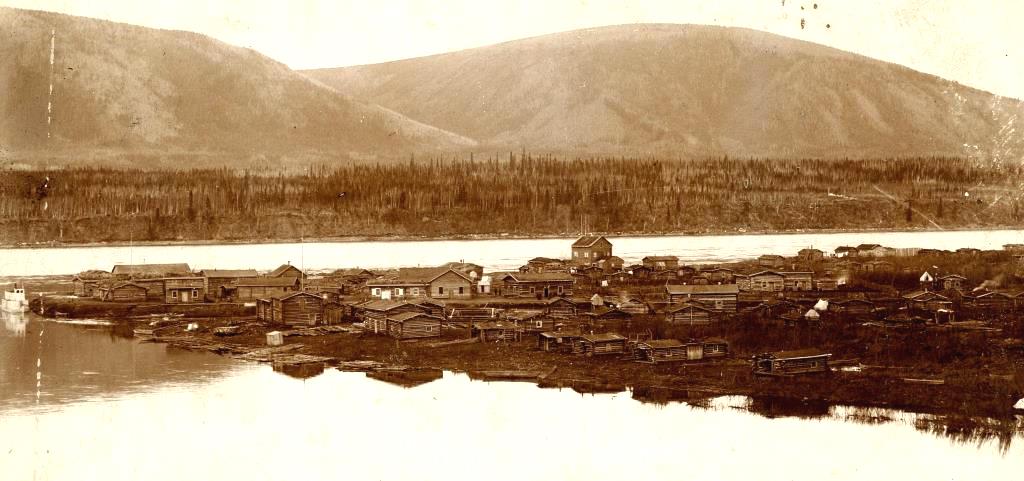
(University of British Columbia Open Collections, Phil Lind collection, #15)
In the fall of 1889 the residents of Forty Mile were faced with a potential hardship that called for rescue by the New Racket. The Alaska Commercial Company’s Arctic,a new steamboat that was much larger than the three other boats operating on the Yukon River, was on its maiden voyage up the river when it hit a rock and sank, losing the winter provisions it was carrying to the interior settlements. The New Racket was offered up to transport 80 miners from Forty Mile down the river to winter in other places, and she made it into western Alaska before being stopped by the freeze-up of the river.
The year 1889 also marked an end of the 14- year trading partnership between Jack McQuesten, Al Mayo, and Arthur Harper when Harper chose to become an independent trader, with Joe Ladue as an informal partner. Harper planned to establish a trading post at Fort Selkirk to facilitate the fur trade in that area and also supply the increasing numbers of miners passing by who were coming into the country via the Chilkoot Pass.
As part of the split from McQuesten and Mayo, Harper assumed ownership of the New Racket, but she was not available to him for his move to Fort Selkirk because she would be spending the winter in Alaska after delivering the Forty Mile miners there that fall. However, Harper and his family were able to make their 225-mile move up the river to Fort Selkirk on the larger steamboat Yukon, which had been involved with the boundary survey between the Yukon and Alaska. Israel C. Russell, an American geologist and geographer who was also aboard the Yukon, recorded that on the 1st of September 1889, Harper “… and his Indian wife and several interesting children went ashore with his large outfit of trading goods and at once began preparations for establishing a frontier store … [and] … passing another winter as he had done many previous ones, in the solitude of the wilderness”.
The next summer Harper had his new post under construction, reviving Fort Selkirk as a trading center 38 years after the Hudson’s Bay Company post there had been destroyed and abandoned. For the next few years Harper would carry out trading and other activities there and elsewhere with the support of the New Racket.
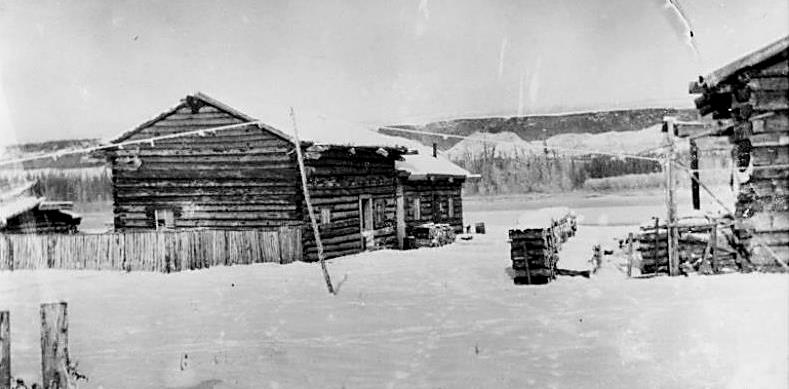
(Yukon Archives, Tappan Adney fonds, Acc. 81-9, #137 – image has been cropped)
In June of 1890, E. Hazard Wells and two others on the Frank Leslie’s Illustrated Newspaper Yukon expedition travelling down the Yukon River stopped at “Harper’s new post” at Fort Selkirk. Two days later further down the river they met the New Racket piloted by Al Mayo returning up the river after spending the winter in Alaska. On board were prospectors, some of whom were going to be taken up the Pelly River, making the New Racket the first steamboat to travel on that river.
It is reasonable to surmise that the New Racket was afterwards left at Fort Selkirk for the use of her new owner Harper in conducting his business there. This account of Al Mayo bringing the New Racket up the Yukon River in 1890 to Fort Selkirk and then up the Pelly River is the last piece of firm information related to her operation that I have come across.
Arthur Harper and Joe Ladue spent the first couple years of the 1890s building up the post at Fort Selkirk, fur trading with the First Nation people, and engaging in some farming, with the use of horses. In 1893, increased mining activity on the Sixtymile River, 22 miles north of the Stewart River, led Harper and Ladue to build a new post on an island near the mouth of the Sixtymile to serve the miners on both rivers. The New Racket would have been instrumental in establishing this new post, which came to be named Ogilvie in honor of William Ogilvie, Yukon surveyor and administrator, and it came to be associated mainly with Ladue.
During the periods Arthur Harper was away from Fort Selkirk, he left his post there in charge of Harold “Buffalo” Pitts, who had come into the country in 1882 with Joe Ladue, Captain Moore, and others and spent that winter with them at Fort Reliance. Harper appears to have spent the winters at Fort Selkirk with his family and parked the New Racket in the nearby Steamboat Slough used for overwintering steamboats
Steamboat Slough near Fort Selkirk
A number of backwater places along the Yukon River became known as Steamboat Slough because they provided good wintering quarters for steamboats. Boats that became caught in the main part of the river in the fall freeze-up were at risk of being damaged during the break-up of the ice in the spring. One of the Steamboat Sloughs known to be used for this was located three river miles up the Yukon River (east) from Fort Selkirk on the same side. A previous article documented the history of this slough (see link at end).
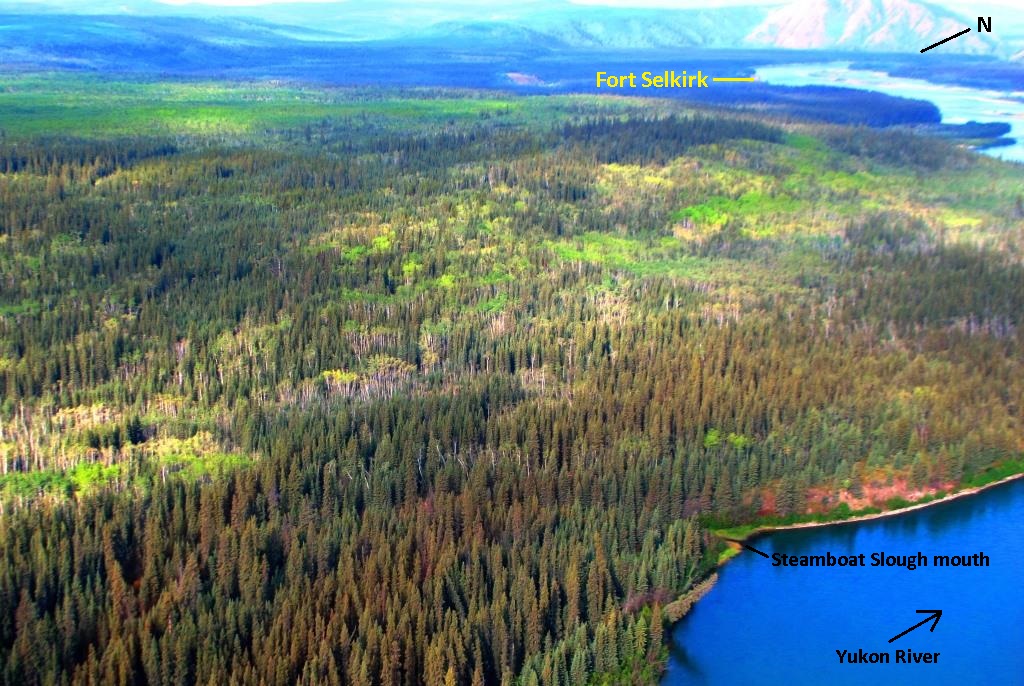
(Gord Allison photo)
This Steamboat Slough is a small slough, but most of the handful of steamboats that were in use before the Klondike gold rush were also relatively small and the overwintering of them is not well documented. During her life, the New Racket spent most of her winters in the Yukon, and beginning in 1890 when Arthur Harper owned her and established his Fort Selkirk trading post, this Steamboat Slough would undoubtedly have been the favored overwintering place.
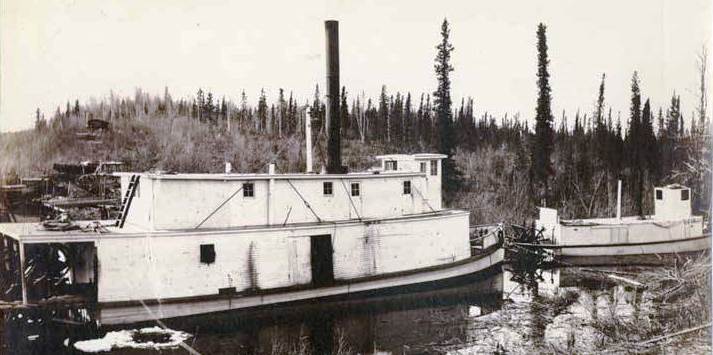
(Alaska State Library, Schieffelin Album, ASL-P277-017-031)
I have found four recorded observations of steamboats being parked in Steamboat Slough, the first occurring in the spring of 1896 that will be covered in the following section. Another observation later that year was made by Ben Moore, who nine years previously had co-piloted the New Racket from Fortymile to St. Michael, Alaska and back. He was doing another mail delivery trip from Dyea to Fortymile in the summer of 1896 and saw a small steamboat in the slough that, in his words, “I understand is the New Racket”. Moore’s phrasing indicates some uncertainty about the identification of the boat.
The following year North-West Mounted Police Inspector William Scarth and journalist and author Tappen Adney each recorded seeing a small steamboat in this location. Inspector Scarth’s trip was in the early summer and he noted that there was a little steamboat called the Pelly in the slough, and was later informed by Harold Pitts at Harper’s post that there had been no steamboat travel to Fort Selkirk for two years. This may have meant there had only been local travel since 1895 or that the steamboat Scarth saw had not been used in that time
An Account of the New Racket Wrecking in Steamboat Slough
While working on a previous article about the history of Steamboat Slough, I came across information that the New Racket had been wrecked in this slough in the spring of 1896. Further research to corroborate this and seek further details was found in the words of a man who witnessed it. This was Stewart Menzies, associated with the Alaska Commercial Company, whose account appeared in an article titled “Some Notes on the Yukon by Stewart Menzies” in The Pacific Northwest Quarterly, a publication of the University of Washington, in April 1941.
Jack McQuesten and Arthur Harper had acquired a 59-foot steamboat called the Beaver and in the fall of 1895 Menzies brought it up the Yukon River from Alaska to Fort Selkirk for them. He arrived on October 13, just ahead of the river freeze-up, and parked the Beaver in Steamboat Slough. There he saw, sitting out of service and needing repairs, “the remains of a little sternwheel steamer which I afterward learned was the famous New Racket”.
After getting the Beaver parked in the slough and ready for winter, ice was running in the river and it was too late for Menzies to leave. He ended up spending the winter at Fort Selkirk with Arthur Harper and three others, one of whom was George Carmack, who had also been stranded there by the ice. Carmack would become one of the discoverers of Klondike gold the following summer.
In the spring of 1896, as the Yukon River ice was about to break up, Stewart Menzies went up to Steamboat Slough and got the Beaver ready to go down the river. When that was completed, Harper asked him to overhaul the New Racket so that it could be put back into service. Menzies and some helpers felled and peeled trees for timbers to pull the boat up onto the bank of the slough so they could work on it. What happened next is described in Menzies’ own words:
“I had just got the boat clear of the water when the main Yukon [River] ice broke and jammed on an island three miles below [Fort Selkirk]. This jamming of the ice naturally caused the water to back up very rapidly, in point of fact the slough rose about 20 feet inside of five minutes, lifted the New Racket up and landed it back in the timber about a quarter of a mile where it landed gracefully on top of a stump which penetrated the bottom of the boat, and as far as I know she is there yet.”
Searching Steamboat Slough
Menzies’ information led me to try to determine the likely resting spot of the New Racket based on his description of her being wrecked. The blockage created by the river ice dam would have caused the high water to back up into the slough in an upstream direction, meaning that the boat would have been carried off toward the south. Imagery tools including LiDAR (Light Detection and Ranging) were looked at, and I thought an unnatural-looking square-shaped anomaly on the land surface shown by the LiDAR might be a potential target.
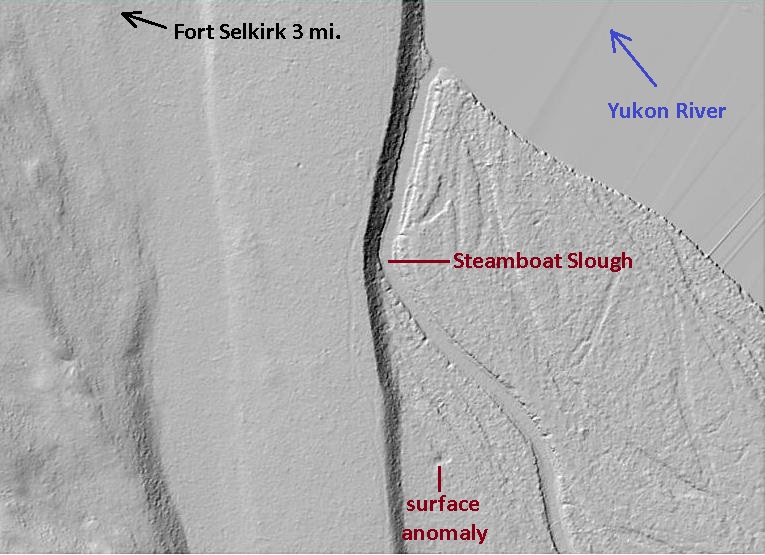
(GeoYukon LiDAR)
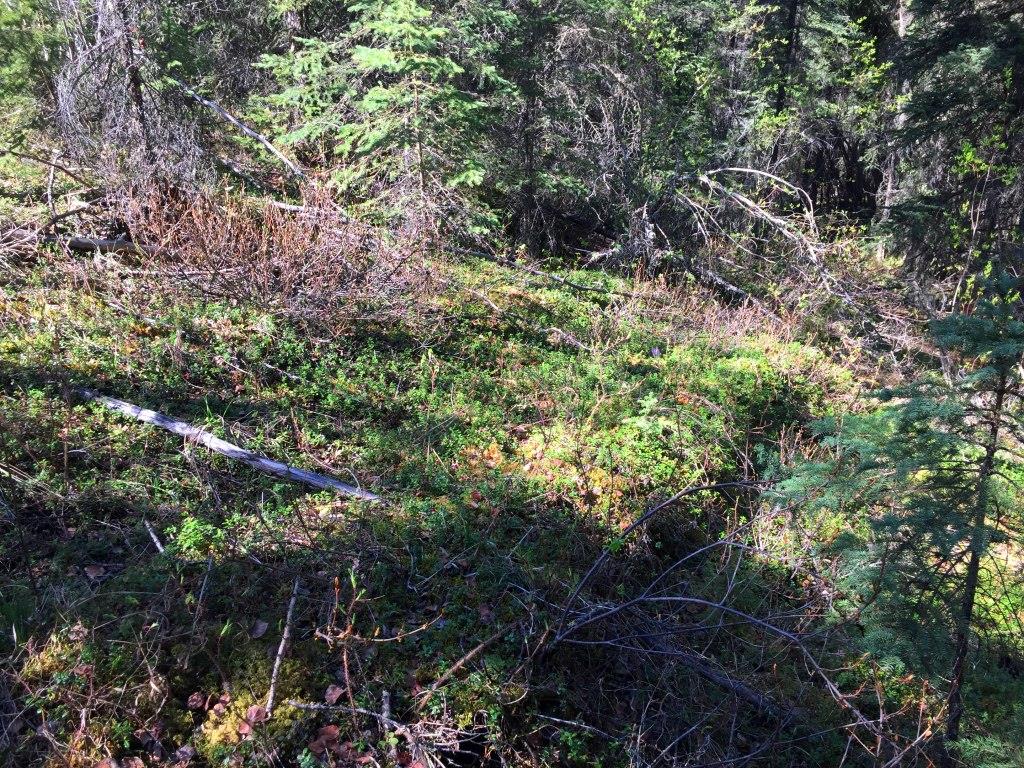
In May 2023 Ron Chambers and I explored an area of Steamboat Slough where the New Racket may have settled based on Menzies’ description of the event and also matched up with the LiDAR anomaly. This spot, an opening in the otherwise dense bush, was located and searched, but no remnants or other evidence was visually detected within the ground vegetation. The metal parts such as the boiler and associated components would likely have been salvaged for their value, and it seems doubtful that any wood from the boat would have survived after lying more than 125 years in this low, damp environment.
High water events in this area over the years since the New Racket’s wreckage as documented by Stewart Menzies have undoubtedly brought deposits of river silt that have covered over any remnants. Any that might still be there would likely have to be revealed by metal detection and sub-surface investigation.
(Gord Allison photo)
Stewart Menzies’ account of this wrecking of the New Racket seems very convincing and would seem to mark the end of her. It is not known if his story, told many years later in a 1941 magazine, was based on notes or a journal or on his memory. If the latter, his recollection may have been influenced by the passage of time, but research so far shows that his account cannot be discounted. In either case, what happened to the New Racket is clouded by differing and contradictory information.
The New Racket/Little Pelley Question
The extensively-researched book by Ed and Star Jones titled All That Glitters: the Life and Times of Joe Ladue, Founder of Dawson City (2009) states that Arthur Harper changed the name of the New Racket to Little Pelley when he assumed ownership of her in 1889. The source(s) of the Jones’s information is not clear and I have not encountered the name Little Pelley anywhere except in their book. Also, some of it is inconsistent with information about the New Racket, creating uncertainty about the steamboat’s life from 1890 onward.
References in “All That Glitters” to the operation of the Little Pelley after the apparent name change include that Harper and Ladue took furs to St. Michael on the Little Pelley for the “next six years” (presumably 1890-1895) and brought back trading goods and miners’ supplies. It is also claimed that in March 1895 Ladue, on an extended trip out of the Yukon, purchased a new engine in San Francisco for the Little Pelley, and that in June that year Harper arrived at Forty Mile on the Little Pelley with furs taken at the Fort Selkirk and the Ogilvie posts.
There is no information about the existence of the New Racket after 1890 that I have come across other than Ben Moore’s possible sighting of her and Stewart Menzies’ account of her wreckage, both in Steamboat Slough in 1896 (it should be noted that Moore’s observation of her came after Menzies’ account). If Menzies’ story is accurate, it would mean that he had been unaware of the name change to Little Pelley made six years previously or possibly ignored it because to him she was the “famous” New Racket. It would also mean that unknown to him, all or some of her was salvaged and she went on under the name of Little Pelley.
Ed and Star Jones’s book further states that Harper and Ladue entered into a formal partnership in November 1896, but Harper retained ownership of Fort Selkirk and the steamboats Beaver and Little Pelley. They also cite a cash journal in Harper’s estate records showing that the steamboat New Racket (“Harper’s Little Pelley”) and the Ogilvie post were sold in December 1903.
There are also other pieces of information indicating that the New Racket was still a known name after 1889, even if it had been changed to Little Pelley. A May 1, 1894 edition of the Yukon Press newspaper listed the seven steamboats that were operating on the Yukon River at that time, and one of them was the New Racket owned by Arthur Harper, with no Little Pelley shown.
In an article by John Sidney Webb titled “The River Trip to the Klondike, 1897” in an April 1898 edition of The Century Illustrated Monthly Magazine, he mentioned that sometime within the three years previous (1894-1896?) the New Racket carried a party of miners up to the forks of the Koyukuk River in western Alaska.
Further research may be able to settle with certainty the New Racket/Little Pelley question. However, it is evident that the bulk of her pioneering work occurred when she was known as the New Racket, in the days when she was one of only a few steamboats on the Yukon River before more and much larger steamboats came with the Klondike gold rush and took over.
The New Racket’s Place in Yukon History
The steamboats listed as having operated on the Yukon River in the Yukon and Alaska from 1869 to the mid-1950s numbers in the hundreds. In 1897, when the Klondike gold rush was getting underway, the number of steamboats that had been operating on the river during the previous decades could be counted on two hands. All the rest came in response to the gold rush and others were built over time after that to provide service on the river until the mid-1950s. Of the pre-gold rush pioneering steamboats, one of the first five was the New Racket.
The New Racket provided transportation services over thousands of miles of Yukon and Alaska rivers for 14 of the years prior to the Klondike gold rush, and perhaps a few years during and after. Most of her work was done without the services of shipwrights, master mariners, docking facilities, wood camps, and winter storage that the steamboats of the gold rush era and afterwards had available to them. Her working life was intertwined with the Yukon history legacies of Jack McQuesten, Alfred Mayo, Alfred Harper, and Joe Ladue, and it is not a stretch to suggest that she played a key role in the activities these legacies were built on.
The year 1897, when the Klondike gold rush was underway, was also significant for the principals in this story. That year Al Mayo settled with his family at Rampart, Alaska, where he spent the remainder of his life until his death in 1924. In July, Joe Ladue left the Yukon for his hometown in New York, where he was married and lived until his death of tuberculosis in 1901 at the age of 46. In October, Arthur Harper died at age 62 of tuberculosis in Yuma, Arizona, where he had gone to try to recover his health. Jack McQuesten was near the end of his tenure in the Yukon, soon moving to Berkeley, California, where he passed away in 1909 at age 73.
Ed Schieffelin, who initiated the New Racket story by having her built in 1882 for his dream of finding mineral riches in Alaska, also died in 1897, in May in Oregon of a heart attack at age 49. This timing meant that he probably died unaware of the Klondike gold discovery that was made not far from where he had once ventured seeking gold. However, at times before that he may have heard or read reports about the New Racket playing a role in Yukon mining activities that led up to the gold rush.
The resting places of many Yukon River steamboats are documented by their presence at Whitehorse, Dawson, Fairbanks, and Shipyard Island (Hootalinqua) or by the locations of their wreckages along the river. Some of these are historic sites and others are known viewing or stopping points for river travellers. The fate of the New Racket, however, seems to be unknown. Her life may have come to an end in 1896 near Fort Selkirk in Steamboat Slough as described by Stewart Menzies, but overshadowed by the imminent Klondike gold rush and slipping quietly into oblivion in Yukon history. Or she may have had a second life for a few years under a different name as noted by Ed and Star Jones.
Andrew Baird, who participated in the Klondike gold rush and stayed in the Yukon, wrote this in a Whitehorse Star article in 1956: “we who came to Dawson in 1898 didn’t merit the ballyhoo which has been written about us. We came to exploit a field the richness of which had been established by the real pioneers of the Yukon, many of whom had spent [died] for it. We merely followed the twenty lean hard years searching trails our betters had blazed.” A parallel sentiment could be expressed about the New Racket, now little known in Yukon history compared to many of the steamboats that came with or after the gold rush. Her story will likely never be fully told, but her name should stand as an important part of early Yukon history.